Renting out a car, boat, or other movable property – what should the agreement include?
Guide to private rental of cars, boats, jet skis, and other movable property: condition, rental period, deposit, deductible, damages, insurance, and return.

Short answer: When renting out a car, boat, jet ski, tools, or other personal property, the parties should regulate the rental period, price, deposit, condition, area of use, liability for damages, insurance, excess, and return in writing. The rules are not the same as for residential leases.
Identify the property precisely
For cars and boats, the agreement should include the registration number, model, and other identifying information. For other equipment, serial numbers, photographs, and an inventory list can be used.
What should the agreement contain?
- rental period and times for collection/return
- rent, deposit, and payment
- condition and existing damage
- who is permitted to use the property
- permitted area of use
- fuel, charging, and costs
- insurance and excess
- liability in the event of damage, theft, or loss
- late return
The insurance must be checked
The fact that the owner has insurance does not automatically mean that renting out or every driver is covered. Check the terms before handing over the property.
Deposit and condition
A deposit should have clear terms for deductions and refunds. It is recommended to photograph the property upon handover and return.
Car
Regulate parking fees, congestion taxes, fuel, and other costs. Also, check for the correct driver's license authorization.
Boat and jet ski
Regulate safety equipment, trailer, fuel, permitted water areas, and what applies in the event of technical problems.
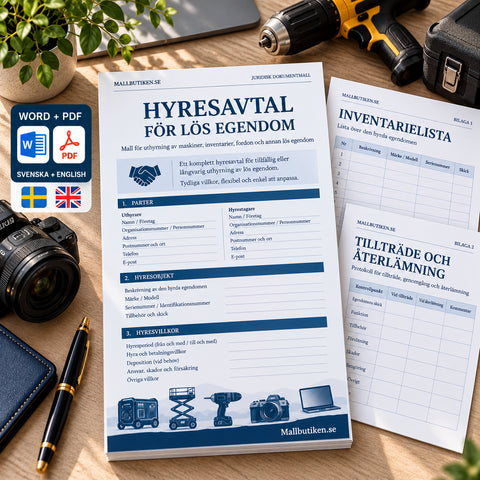
See Mallbutiken's car rental agreement. There are also separate templates for boat/jet ski and personal property.
FAQ
Does the Rental Act apply to cars and boats?
No. The rental rules in Chapter 12 of the Swedish Land Code refer to houses or parts of houses, not personal property.
Can the owner demand a deposit?
The parties can agree on a deposit, but the terms should be clear.
This article provides general information and does not replace legal or insurance-related advice.